The next few pages are to help you get a better idea of what you will be studying.
We’re also very happy to discuss more about the courses – just email Paula on [email protected] and we’ll be happy to help.
Please note: Beekeeping and Permaculture modules are not available through distance learning
Remember:
- To gain the full Level 5 Common Award Certificate will take two years by Distance Learning. If you need to complete the course in one year then you will have to enrol as a full time day student at the college.
- You can sign up for the first year and then decide at the end of the first year whether you want to continue and complete the full course. If you complete the first year you will receive certificates for the modules you pass. Some students choose to only do the first year and are happy to have gained practical and theoretical experience in organic growing. There’s no requirement to do two years.
- If you decide to complete the full course, you don’t have to come back straight away: The modules stay valid so you could come back a few years later to complete the full course.
Year One – 4 modules (€1200 or €805 with Skillnet grant)
Year one includes four level 5 Common Award modules.
Completing this course will give you practical skills and knowledge to get you growing successful organic fruit, vegetables and herbs. You’ll also gain experience about the history of organics and how organic standards are applied in Ireland. The Plant Identification module will help you recognise common weeds, wild flowers and trees as well as learning how to plan a successful garden.
1. Fruit and Vegetable Production (5N2552)
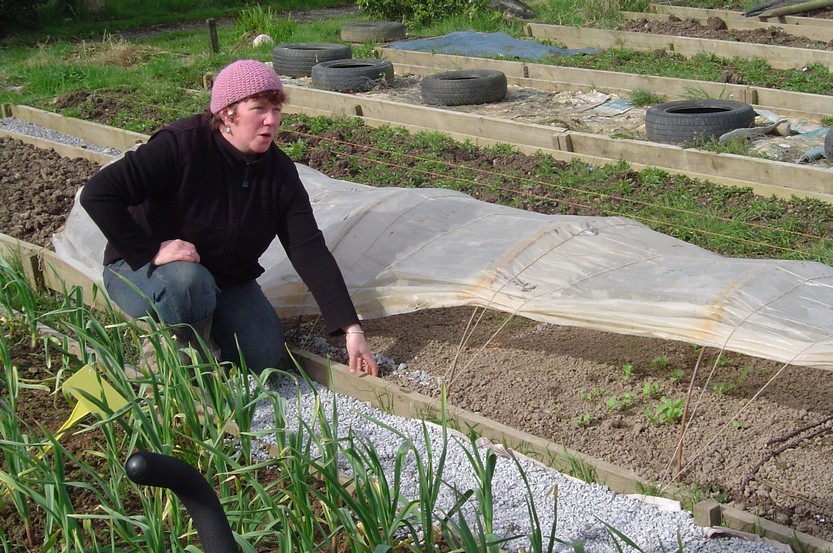
This module goes into the detail of how to grow specific fruit and vegetable crops organically. Together with Soil Science and Growing media it gives you a sound introduction to organic growing. It specifically recommends the best techniques and varieties for growing in Irish conditions.
When you successfully complete this module you will:
- be capable of preparing and cultivating a site suitable to food crop production
- have acquired skills in propagation, cultivation and harvesting of food crops
- be capable of selecting weed, pest and disease control measures appropriate to specific situations
One of the assignments (mini-project) for the food crops module will be to plan a year round supply of a chosen vegetable in your garden. After completing this module you will have acquired the skills necessary to grow and harvest your own vegetables throughout the growing
season.
Topics include:
- Planning, ground prep, yield and year round supplies
- Overwintering crops
- Protected cropping: growing in polytunnels and under cover
- Rotations and the vegetable families
- Seeds and seedlings
- Successional sowing
- Fruit and orchards
- Harvesting, storing, eating, cooking and selling!
Assessments for Food Crops are:
- Written exam at the college in April/May
- 4 practical skills assignments along with a mini-project – Plan a year round supply of a chosen vegetable.
2. Soil Science and Growing Media (5N2530)
The soil is the most important part of an organic system (except for you)! Organic growing begins and ends with the soil – it’s critical to everything we do – by developing a healthy soil you’ll find you grow healthier crops and that the work of gardening gets easier. This module will give you the skills to understand your soil and how to improve it. You’ll also learn about the best ways to improve fertility organically with compost and other organic fertilisers. Understanding the soil and fertility is crucial to becoming a good organic grower.
When you successfully complete this module you will be:
- be familiar with the origins, characteristics and properties of
- be capable of manipulating the properties of soil to support crop production
- appreciate the importance of the practices and requirements of soil nutrition and cultivation for organic crop production
- care and foster a respect for the environment as a finite resource.
Topics include:
- Soil origins profiles, and Soil Types
- Soil drainage and erosion
- Soil water, air and temperature + Irrigation
- Soil nutrition and soil pH and liming
- Nitrogen cycle and nitrogen fixation
- Soil Ecology
- Organic matter
- Cultivation, Dig and no dig
- Compost
- Organic manures and fertilisers
- Green manures
- Mulches
- Soil-less growing media and liquid feeds
Assessments for Soil Science are:
- Written exam in May
- 4 skills demonstration
- 2 short Assignments
3. Organic Principles & Standards (5N2550)
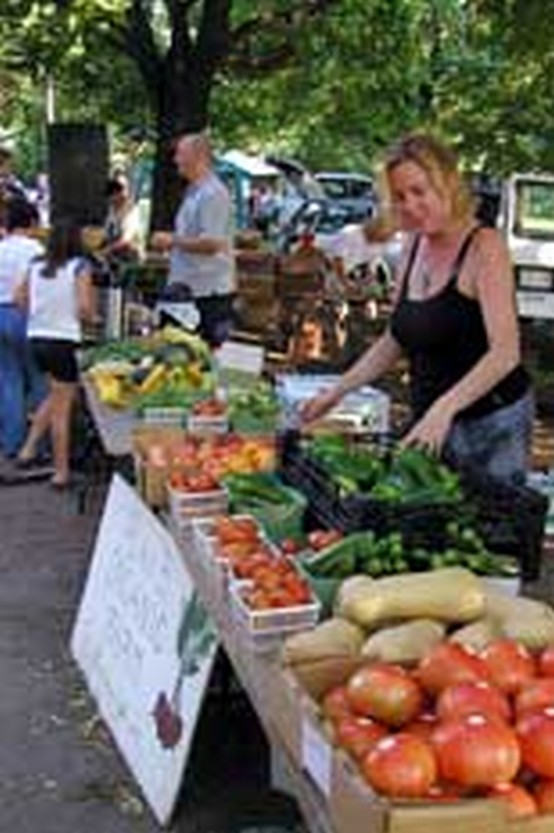
We are delighted to offer the Organic Principles & Standards module as part of this level 5 common award in Horticulture.
In addition to teaching students to gain a clear understanding of the principles, practices and relevance of organic food production, completion of this module will also enable participants to apply for grants such as the Organic Farming Scheme (should any of you decide to set up a commercial organic horticultural business).
Click on the following link for more details about the Organic Farming Scheme:
http://www.ifa.ie/schemes-and-
This is one of our most popular modules and covers all the basics you’ll need to know about growing crops organically in Ireland – this is especially useful if you are aiming to sell organic certified produce with a symbol.
When you successfully complete this module you will:
- be familiar with organic principles and practices
- be aware of regulations and standards in the field of organic production
- appreciate the role of organic food production within the wider environmental movement
- have acquired skills in propagation, cultivation, and harvesting of food crops organically
- appreciate the organic approach to the control of soil fertility, weeds, pests and disease.
An important part of the module is the project where you grow a crop in your garden.
Topics on Organic Production Principles include:
- The history and principles of organics
- Organics in Ireland
- Benefits of organic methods
- Organic organisations
- Organic standards
- Seed saving
- Rotations
- Converting to organics, farm inspection and record keeping
- Financial assistance for organic producers
- Weed and pest control
- Local food, marketing, farmers markets and box schemes
Assessment for Organic Production Principles is:
- Written Exam at the college in May
- Project where you draw up a conversion plan for an organic horticultural holding
- Assignment where you research the current market outlets available for organic produce
in Ireland.
4. Plant Identification and Use (5N2527)
Would you like to be capable of identifying a wide variety of trees, shrubs and other plants? Would you like to learn some botanical / Latin names?
You’ll learn how to select appropriate plants for different conditions and be able to plant in a variety of situations. Developing a basic knowledge of what plants are around you and what their names are so you can communicate with other growers is very helpful for all growers.
When you successfully complete this module you will:
- be capable of identifying a wide variety of trees, shrubs and other plants
- be familiar with the characteristic features of a wide selection of plants
- be capable of selecting appropriate plants for different situations
- demonstrate ability to plant in a variety of situations
- be familiar with techniques used to control weeds, pests and diseases.
Topics for Plant Identification include:
- Botanical names and plant nomenclature
- Plant parts and names
- Trees
- Weeds
- Vegetables, Herbs and Fruit
- Wild Flowers
- Planning a garden
Assessment for Plant Identification is:
- Skills demonstrations will include:
- a) identification skills test where you identify plants at the college.
- b) identification of a small selection of plants using a botanical key
- c) designing a planting scheme for a chosen area
- Short exam at the college (usually during Summer practical days)
Year Two – 5 Modules (€1200 or €805 with Skillnet grant)
To obtain the full certificate you will complete all nine level 5 Common Award modules. These are the four modules already listed and the five modules below.
5. Plant Science (5N2528)
In order to grow plants well it is crucial to have a good understanding of how they grow. This module covers basic botany as it applies to organic growing. You’ll be amazed how much easier it is to care for your plants once you understand how they grow. You’ll know more about when to water them, how best to care for them and their nutritional needs at different points in the life cycle.
When you successfully complete the Plant Science module you will:
- have acquired a broad knowledge and understanding of plant structures, growth and development
- be familiar with the basic living processes of plants and their relationship with environmental factors
- acquire skills of observation, investigation and recording
- be familiar with the characteristic features of a wide selection of plant life
Topics for Plant Science include:
- Classification of plants
- Plant Cells
- Plant Structure: roots and stems, leaves and flowers
- Plant transport systems, Respiration and Transpiration
- Plant Life cycles and Reproduction
- Plant hormones
- Genetics and DNA
Assessment for Plant Science is:
- Written exam at the college in May
- 4 short assignments
6. Plant Propagation (5N2547)
One of the great things about growing your own is learning how to propagate your plants right in your own backyard. This module will bring your through the various methods of propagating from sowing seeds to grafting an apple tree. You will learn the skills and knowledge to carry out standard propagation techniques and gain a thorough understanding of the principles and processes involved in the various plant propagation techniques.
Topics include:
- Principles of plant propagation
- Various methods of propagation such as seeding, grafting, layering, division, hardwood and softwood cuttings.
- Maintenance and aftercare of seedlings and cuttings
- Seed sowing, extraction, cleaning and pre-treatments to overcome dormancy
- Open-pollinated seeds and Hybrid seeds
- Seed saving in the home garden
- Suitable Growing media for different methods of propagation
- Tools and Record keeping
Assessments for Plant propagation are:
- Written examination at the college in May
- 6 short assignments
7. Plant Protection (5N2546)
This module goes hand in hand with learning to grow your own organic vegetables. Part of being a successful gardener is learning how to protect your plants from pest and disease. After completing this module you will have the knowledge and competence to identify a wide range of weeds, plant pests, diseases, disorders and the control measures appropriate to protect your plants from their devastating effects.
Topics for Plant Protection include:
- Characteristics of common plant pests including insects, other arthropods, molluscs, nematodes, birds and mammals
- Characteristics of disease causing agents including fungi, bacteria and viruses
- Characteristics of the causal agents of non-pathogenic plant disorders
- Identification of a wide range of horticultural pests and diseases including their symptoms, type of damage and control measures
- Effects of reproduction, spread and control of weeds on an organic holding
- Dangers associated with the use of synthetic pesticides and herbicides
- Correct application and storage of natural pesticides and herbicides
Assessments for Plant Protection are:
- Written examination at the college in May
- Skills demonstrations – a selection of skills demonstrations will be carried out at various times throughout the year and recorded by each student.
- 1 Assignment
8. Communications (5N0690)
Communication skills are highly valued in the workplace but this module extends beyond exclusively vocational needs, recognising that the acquisition of these skills is a life-long process, and central to personal, social and professional development and fulfilment.
This module is a requirement for all QQI (Quality Qualifications Ireland) courses and should be taken if you are completing the full certificate. You will need to do a presentation, write sample letters and create other forms of visual communication.
This module does not normally require too much work and you will complete it quite quickly.
Topics include:
- The written word
- Non-verbal communication
- Interpersonal communication
- The Spoken Word (listening, speaking, dialogue)
- Interviews
- Giving Presentations
- Groups and meetings
- Communication technology (phone, computers)
- Mass Communication – the media
Assessment for Communications is:
- Perform a short 5 to 10 minute presentation on a subject of your choice
- Produce a collection of work including written, visual and technological aspects.
9. Work Practice (5N1433)
If you wish to complete a full certificate you will need to complete 15 days work placement on an organic horticultural holding of your choice. This can be with a grower or organisation that is near to you or of interest to you. We have contacts with some of the best organic growers in the business and can help with a choice of host. The work experience can be 15 consecutive days, or you could go every Saturday for 15 weeks – it’s up to you – you just need to complete 15 days in total. You might like to complete some of these days during the first year of the course.
You will also need to keep a garden diary based on work you do at your own garden, during practical days at the college and farm walks or gardens visited throughout the year.
Keeping a garden diary is good practice for all gardeners and we encourage students get in the habit of doing this during the first year – you’ll then have already completed some of the work Practice module before starting year two. Another good time is over the summer when there is plenty going on at farms and gardens. You will need to take photos and notes of what you did and hand in a report on how the placement went.
Assessment for Work Practice is:
- Written report of 15 days work placement on host farm.
- Garden diary details of skills and work carried out at your own garden, farm walks and practical demonstrations
- 2 assignments (based on potential employment opportunities in the organic horticultural sector in Ireland.
Now you have a summary of all the modules you’ll be wanting to know how to sign up – read on for help:
- Next: Are these courses for me?
- Back to DL Menu